Upholstery Cleaner Guide: Choose the Right One Without Ruining Your Fabric
I have seen many people who rushed out and picked up a spray bottle to clean a stain, and only find that they now have either a fainter spot, a stiff area, or even a ring that is even more terrible than the mess you started with. This article was written so people know exactly what the right method is for Upholstery cleaning. Upholstery cleaning is not a one-size-fits-all job. The wrong product applied to the wrong material can erase years of careful maintenance of your furniture within thirty seconds.
Fortunately, with a little bit of knowledge, Upholstry cleaning can be done correctly and safely with no difficulty at all. In fact, it just takes a few preparations before you begin.
Know Your Fabric Before You Clean

Every mistake that I have made regarding upholstery has stemmed from neglecting this vital step.
Look first for the cleaning code on the manufacturer’s label.
You will likely see a small tag attached to the furniture that is labeled either W, S, WS, or X. Don’t think that these letters are just there to look pretty — they are actually the manufacturer’s way of telling you exactly what their product can withstand:
W – water-based cleaners only
S – solvent-based cleaners only (not water)
WS – either water-based or solvent-based
X – vacuum only (not even wet)
By ignoring the label, you are making a riskier gamble than you realize.
Understand your common upholstery fabrics.
The cotton and linen fabrics are fairly durable when it comes to moisture, but too much can cause them to shrink or even stain. The microfiber is exceptionally durable, but there are some cleaning products that will leave streaks on it. The leather needs conditioning cleaning products.
Realize why the incorrect cleaning product backfires.
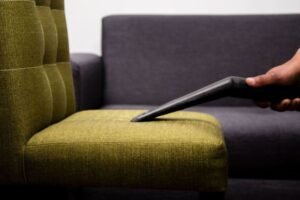
Applying a water-based product to an S-coded item results in permanent water marks or shrinking. Applying strong solvents to a delicate natural fiber results in loss of color or weakening of the material structure. This is the type of task wherea “trial and error” approach doesn’t work, because the effects appear immediately and are irreparable.
If no label is present,
check whether it is real. Apply some moisture to a hidden area using a damp white cloth. If there is any substantial amount of color transferred, or the material puckers, it should be treated as delicate and tested gently. Otherwise, chances are that you are dealing with a less delicate synthetic fabric blend, but still spot testing is a must.
The texture of the fabric affects its tolerance to moisture and cleaning products significantly more than one can assume.
Tightly woven smooth fabric dries out evenly and can withstand a wide variety of products applied. On the other hand, loose or textured fabric retains moisture and product residues inside, requiring gentle treatment regardless of the product used.
Types of Upholstery Cleaners Explained
The particular types of cleaners must be used according to their individual purposes, and using any type of cleaner other than the appropriate one can cause just as many issues as ignoring the code on the label completely.
Foam cleaners are ideal for use with W-coded materials due to their ability to minimize the amount of moisture that penetrates the fabric during cleaning. They are applied to the material and left to settle before being worked into the fabric and finally wiped off after drying.
A spray cleaner is the easiest and most convenient form of cleaning material; however, it is also the easiest one to abuse. Since it uses a wet application method, it becomes a little bit difficult to use on delicate fabrics because it may soak the cushion.A steam cleaner is an excellent tool when it comes to the removal of stains and allergens, but it works only on those fabrics that can be immersed in water. Using steam on a fabric that has an S code will cause shrinkage, watermarking, and backing damage to your carpet that cannot be reversed.\
DIY cleaning is very popular on the Internet, and much of it stands up to scrutiny. A mixture of mild dish soap and water can do quite an adequate job on strong, W-coded fabrics in case of a light stain. Baking soda treatment does not use any moisture and helps remove odors from the fabric. This is perhaps the most gentle DIY option, applicable to any fabric that you are afraid to try something else on.
It goes without saying that enzyme cleaners are the perfect choice when dealing with pet-related odors and messes since enzymes neutralize organic proteins that urine and vomit consist of rather than cover them with a fragrance. Normal cleaning products are well known for shifting smells rather than eliminating them. Having pets? You will need this cleaning product.
How to Clean Upholstery Step-by-Step
This is the section where good intentions cause damage to furniture pieces.
It’s necessary to clean the fabric properly before cleaning it
The dust and debris will act like sandpaper after they get wet – they will be worked into the fiber of the fabric and won’t be able to come off. This needs to be done using a vacuum cleaner with an upholstery brush attachment before the process.
Testing the fabric in advance is crucial.
One should never skip this point. There should be a test done on a hidden part of a furniture piece, e.g., the backside of a cushion. A very small amount of the cleaning agent should be used there for the required period of time and checked for color changes, texture changes,s or residue.
Blot the furniture; don’t rub .it
Blotting works best, because it removes the stain without working it in deeper or smearing it around. Rubbing may do both of those things. One shouldn’t saturate the fabric with water – it’s necessary to spray it evenly in passes.
It needs enough drying time and good air circulation
Either open up a window or use a fan to circulate air in that region. The reason why fabric gets a foul smell from the mold is that it does not get enough drying time and air circulation to become fully dry. Upholstery usually takes at least a few hours, and sometimes up to a full day in humid regions awith nd thick cushions.
Know how clean it should look after cleaning.
It should have no trace of anything visible on it, should be neither stiff nor sticky, and should not give off any odor. If any of the above still holds, it means the region is not cleaned well enough, and it could easily happen again in the next region.
Mistakes That Damage Upholstery
It is important to note that most damage to upholstery occurs not as a result of poor quality of products but rather because of using high-quality products incorrectly.
Over-soaking the fabric is one of the most frequent mistakes people make. The extra water, which does not dry well, goes into the foam of the cushion and backing, thus creating an ideal place for growing molds and mildews. If the mildew gets into the foam of the pad, it is almost impossible to get rid of it without replacing the cushion.
Using bleach or strong chemicals for cleaning any fabric except for those that are bleach-resistant will remove color and destroy the fiber structure of the fabric in a moment.
Omitting the spot test converts an insignificant yet reversible risk into something significant and irreversible. It requires merely two additional minutes. The other option is replacing a couch, which is possibly not necessary.
Aggressive scrubbing may make one feel productive at the moment, but it will ruin the fiber structure, cause pilling of clothes, and create shiny areas, especially on fabrics like velvet, chenille, and other textured fabrics. Blotting gently with continued effort beats aggressive scrubbing almost always.
Neglecting the manufacturer’s code by the manufacturer is the mistake that makes all the others possible. This is the only thing you need to know to be able to clean properly.
Best Upholstery Cleaners by Fabric Type
Leather Sofas
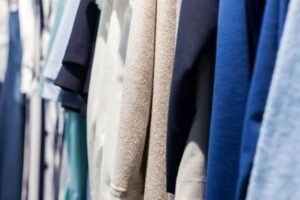
As far as the use of leather is concerned, the ideal option would be to buy a cleaner/conditioner for the leather material. The conditioner prevents any cracks in the leather, which is not achieved by fabric cleaners. Using a slightly moistened cloth should help clean effectively while protecting the furniture’s leather surface.
Microfiber
Many problems experienced when cleaning microfiber arise because a water-based cleaner is used on S-coded microfiber. Rubbing alcohol may be used as a safe alternative in such cases. Apply lightly using a white cloth, and it will help you to avoid the classic “watermark ring” problem.
Cotton/Linen Blends
W-code fabric cleaners or dish soap are both good for cotton and linen fabrics, since they are relatively easy to clean. Use a small amount of either option.
Synthetic and performance fabrics
These tend to be the easiest to work with, and they will likely tolerate standard foam or spray upholstery cleaners just fine, but a spot test certainly won’t hurt after those 30 seconds you took anyway.
Time to call in a pro
When the stain is older than a few days, the stain covers a big area, the stain is on an S-coded fabric that you aren’t comfortable cleaning, or your previous DIY attempt at cleaning already damaged the fabric in question. Fixing a mistake from a DIY job only makes the overall repair more costly.
.
